Core
Six functions
Govern, Identify, Protect, Detect, Respond and Recover, each broken into categories and outcomes.
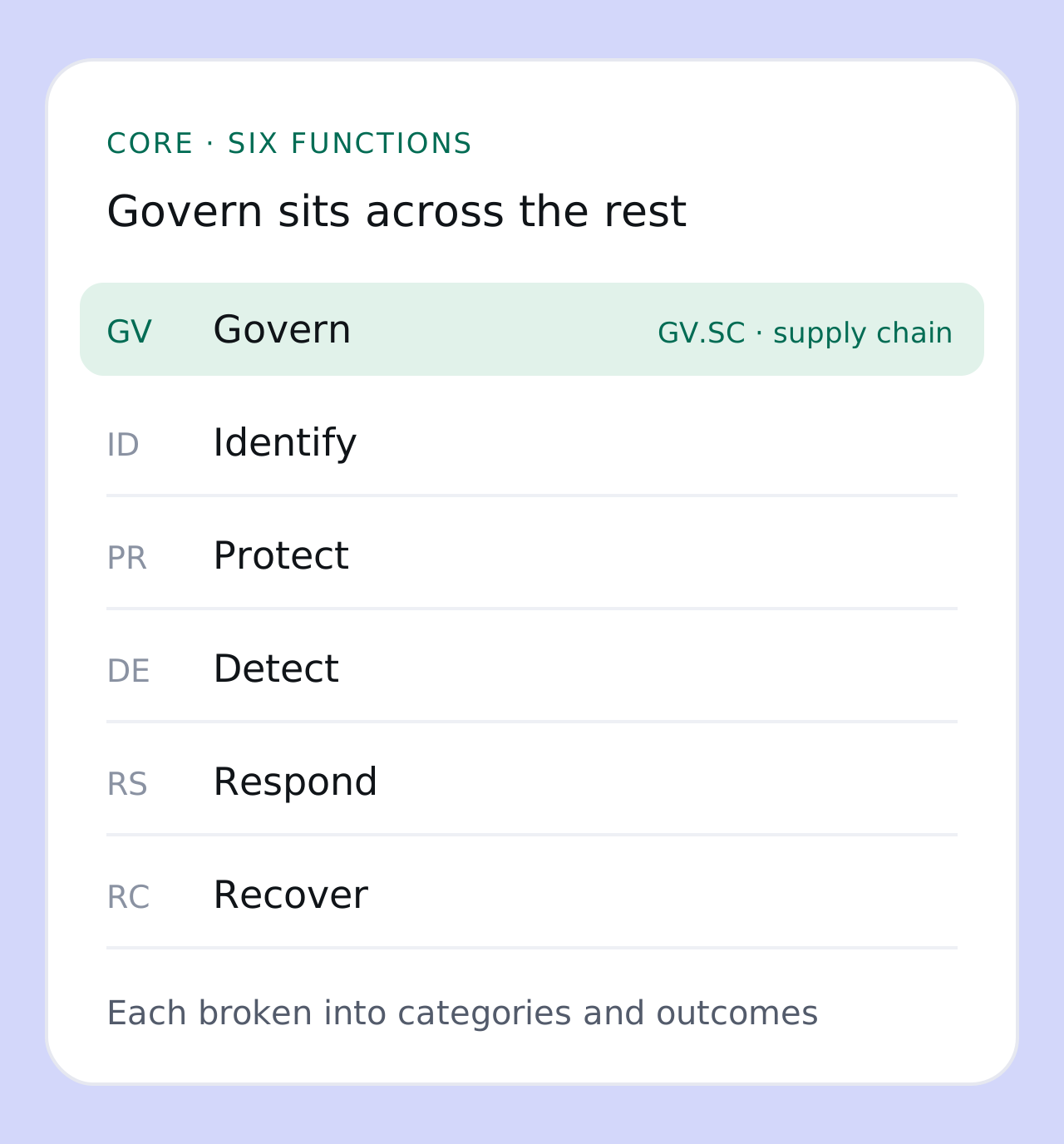
The NIST Cybersecurity Framework 2.0 is voluntary guidance from the US National Institute of Standards and Technology, released in February 2024. It is used well beyond the US to organise cybersecurity around outcomes, and it places supply chain risk under its new Govern function.
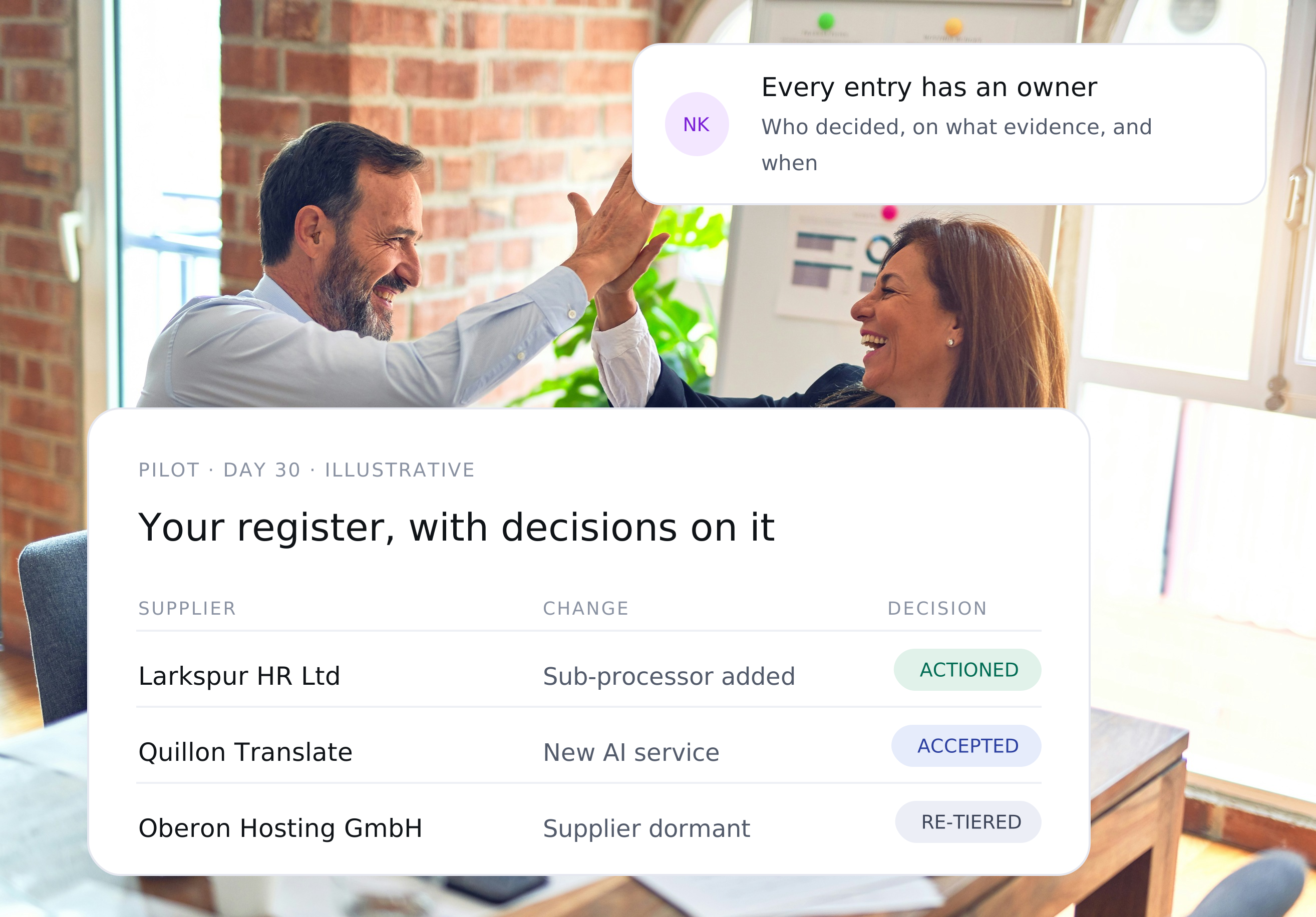
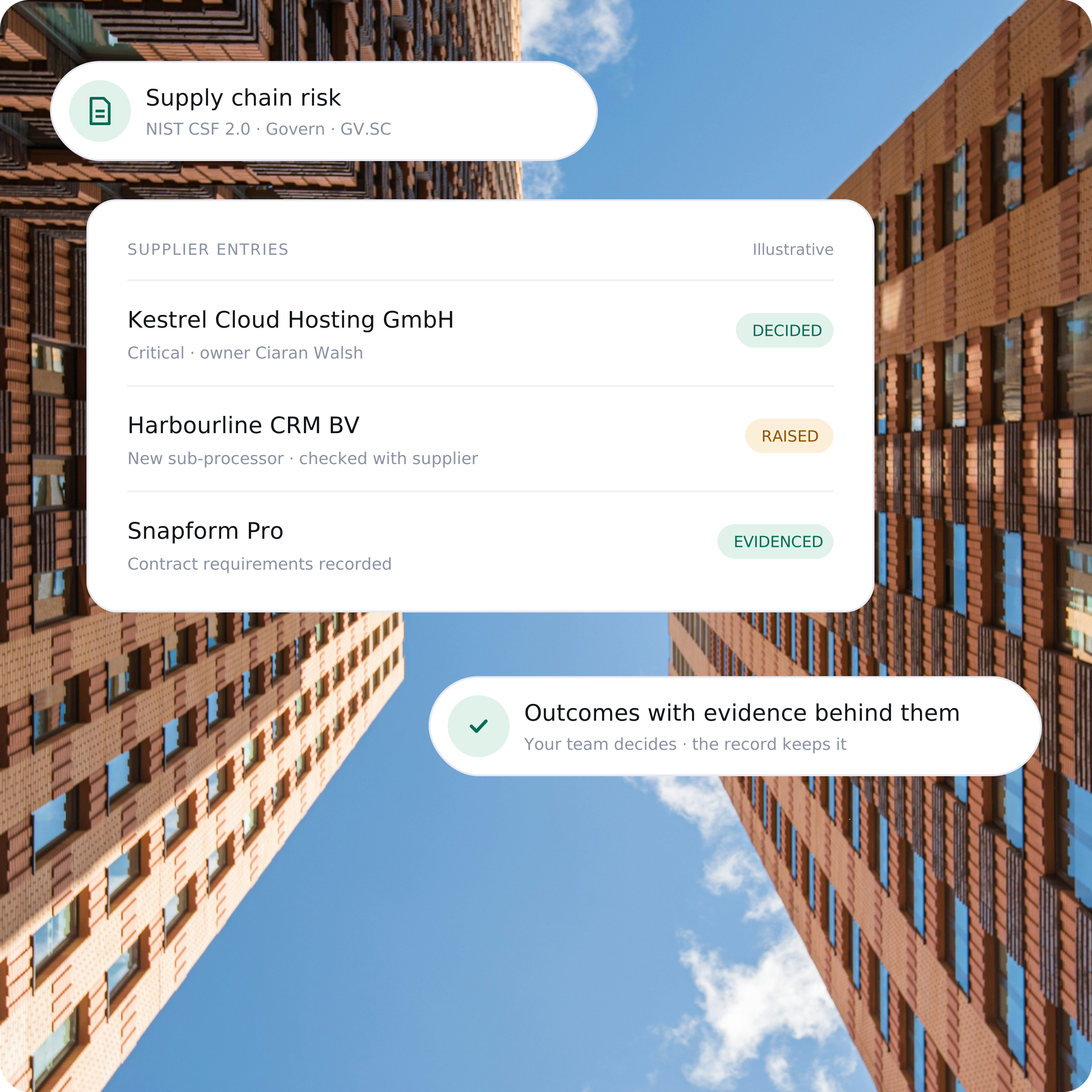
Montro keeps the supplier side of those outcomes in one register, with each supplier’s owner, how critical it is, and the decisions taken as it changes.
Framework
CSF 2.0 isn’t certified and sets no fixed controls. It describes outcomes, helps you see where you stand, and lets you decide how far to go.
Core
Govern, Identify, Protect, Detect, Respond and Recover, each broken into categories and outcomes.
Profiles
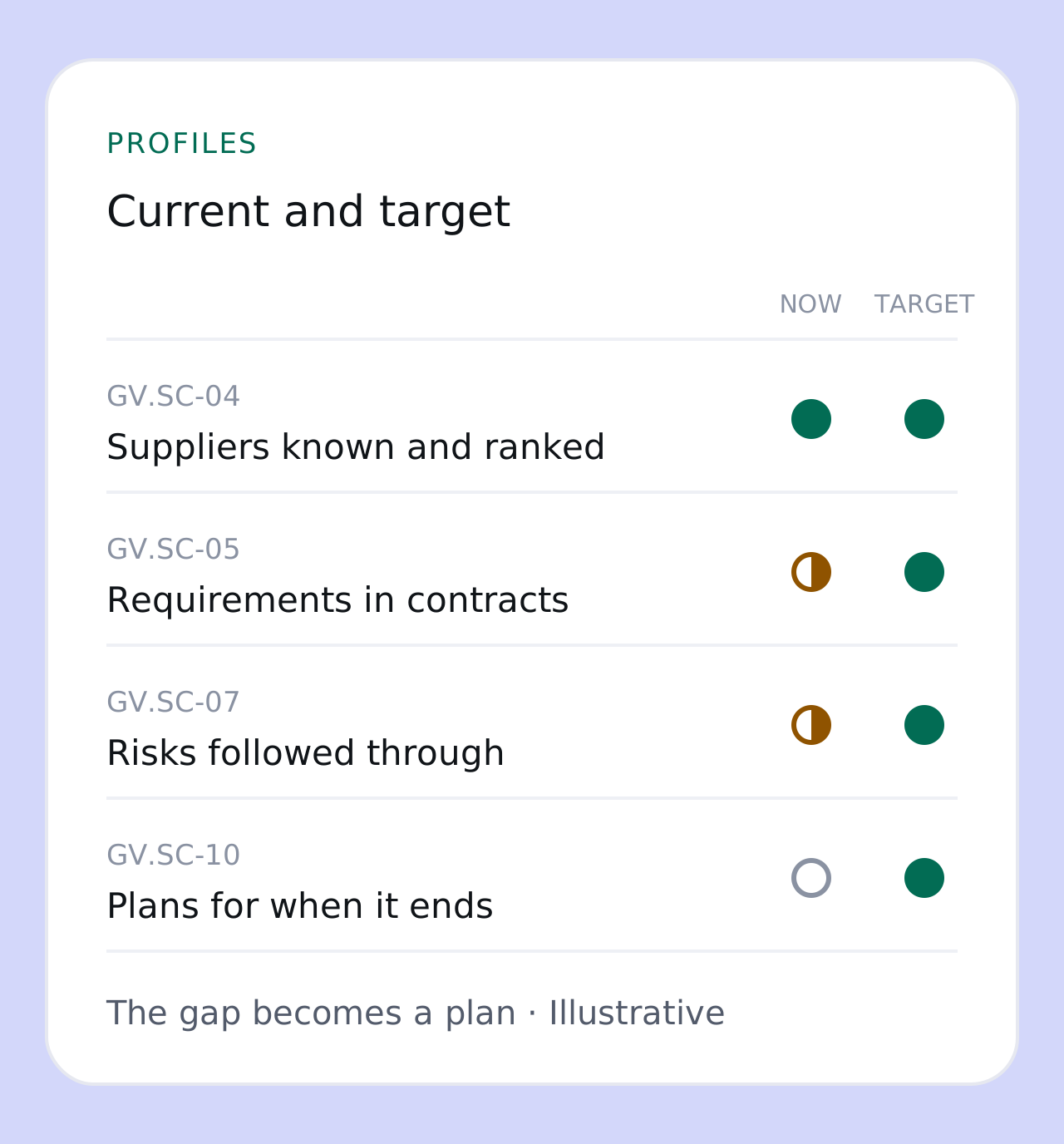
A profile records where you stand on each outcome today and where you want to be, so the gap becomes a plan.
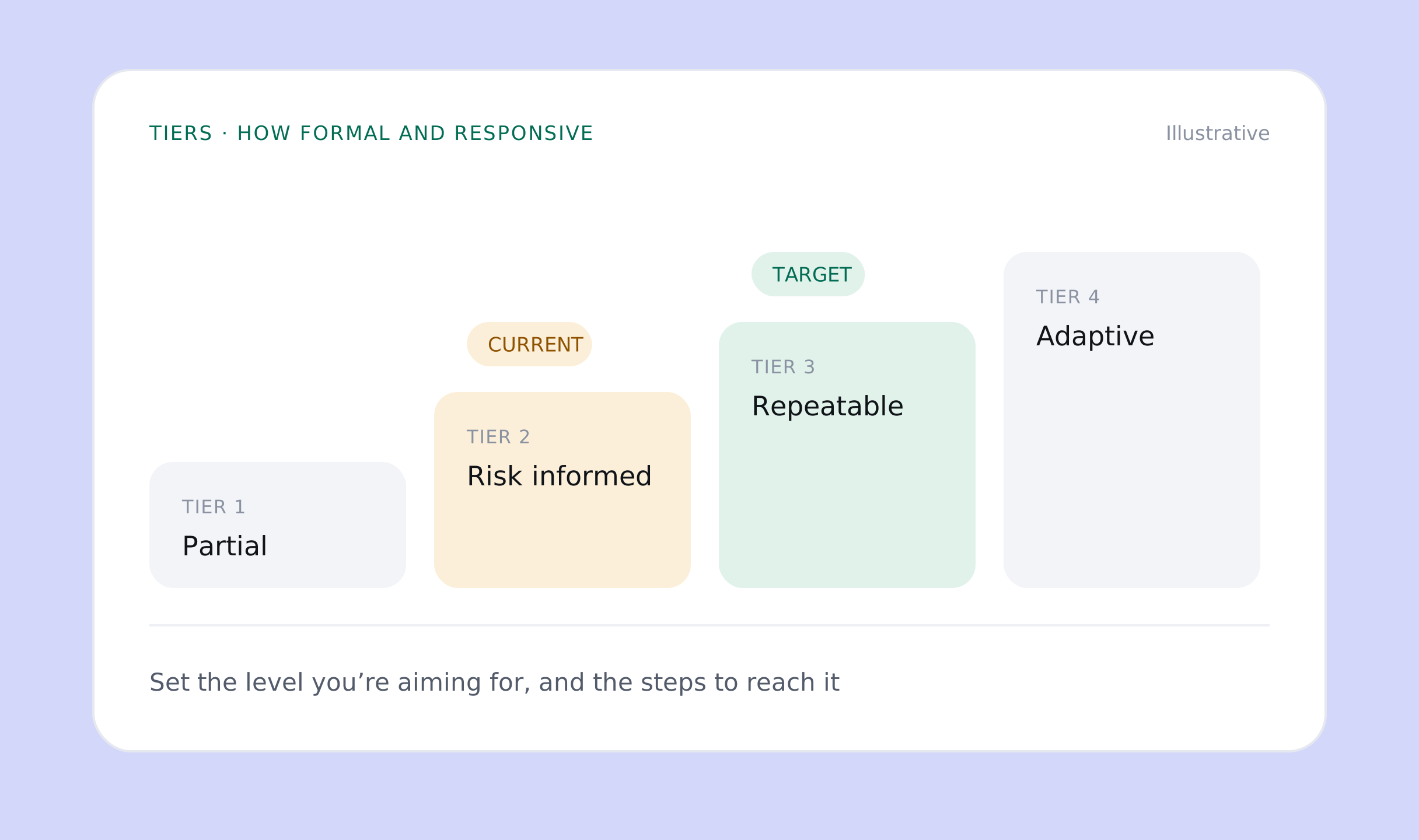
Tiers
Tiers describe how formal and responsive your approach to cybersecurity risk is, and help you set the level you’re aiming for.
How Montro helps
GV.SC describes what good supply chain risk management looks like. Montro keeps the record that shows it happening, supplier by supplier.

Suppliers arrive as candidates from your sign-in, finance and cloud data, and your team sets each one’s owner and how critical it is.
The security requirements each contract sets out are recorded against the supplier, so you can see which suppliers have them and which don’t yet.
A new sub-processor, a lapsed certificate or AI switched on is raised with its source, checked with the supplier and decided by its owner.
What you get
Evidence for the supply chain rows of your current profile.
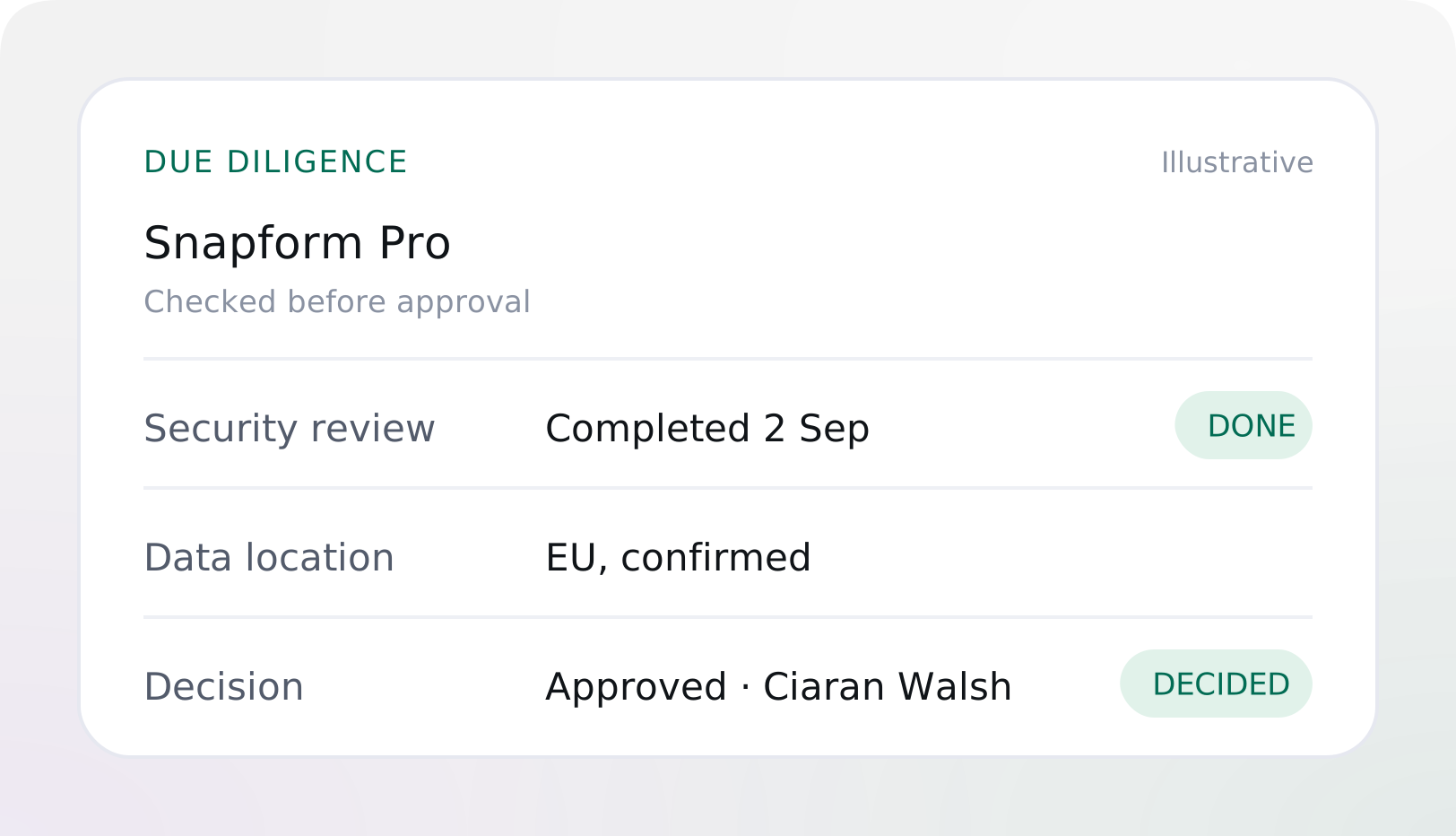
Due diligence
The due diligence done before a supplier is approved stays with its entry, alongside the decision it led to.
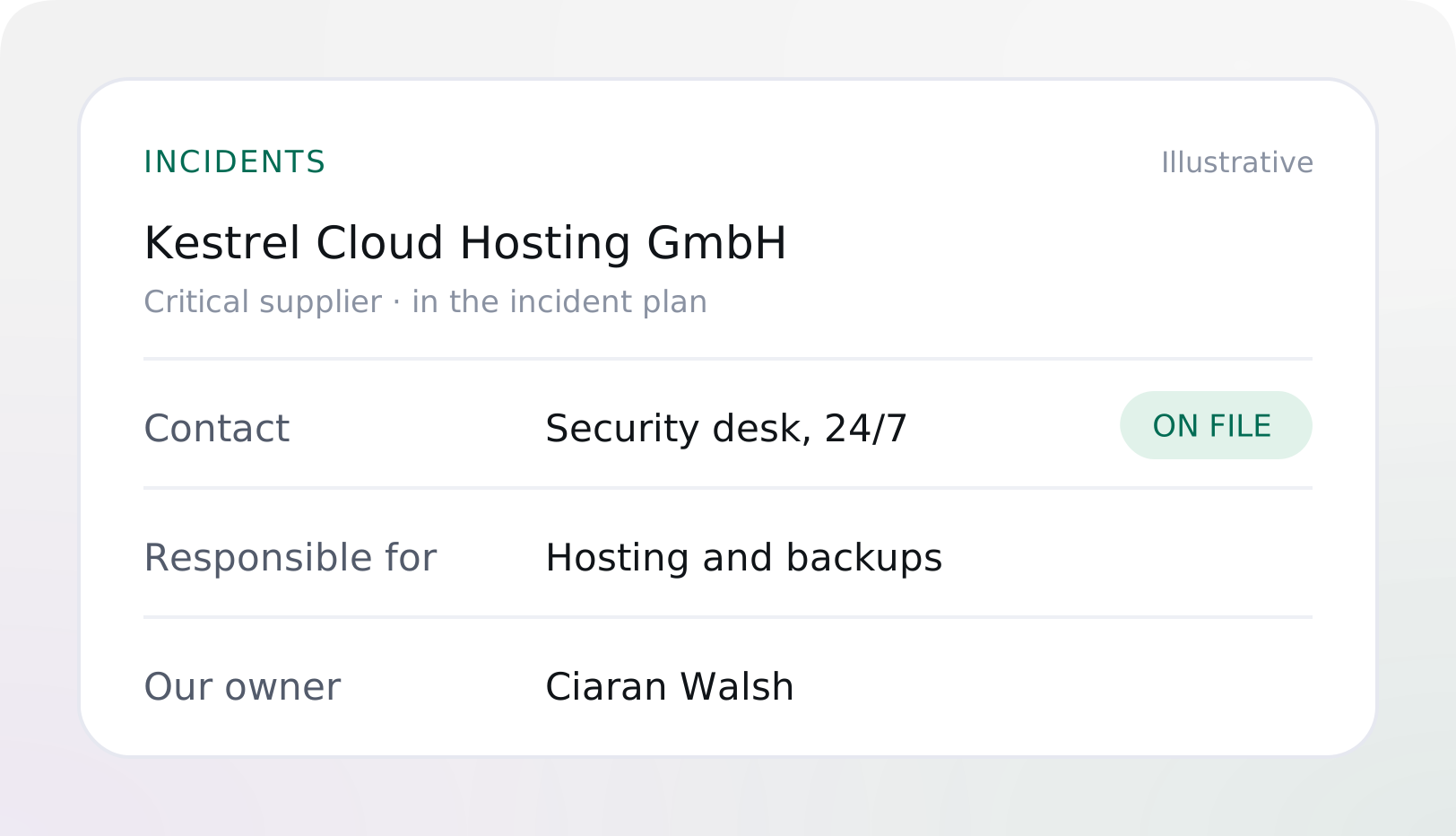
Incidents
Critical suppliers’ contacts and responsibilities are on record, so incident and recovery plans can draw on them.
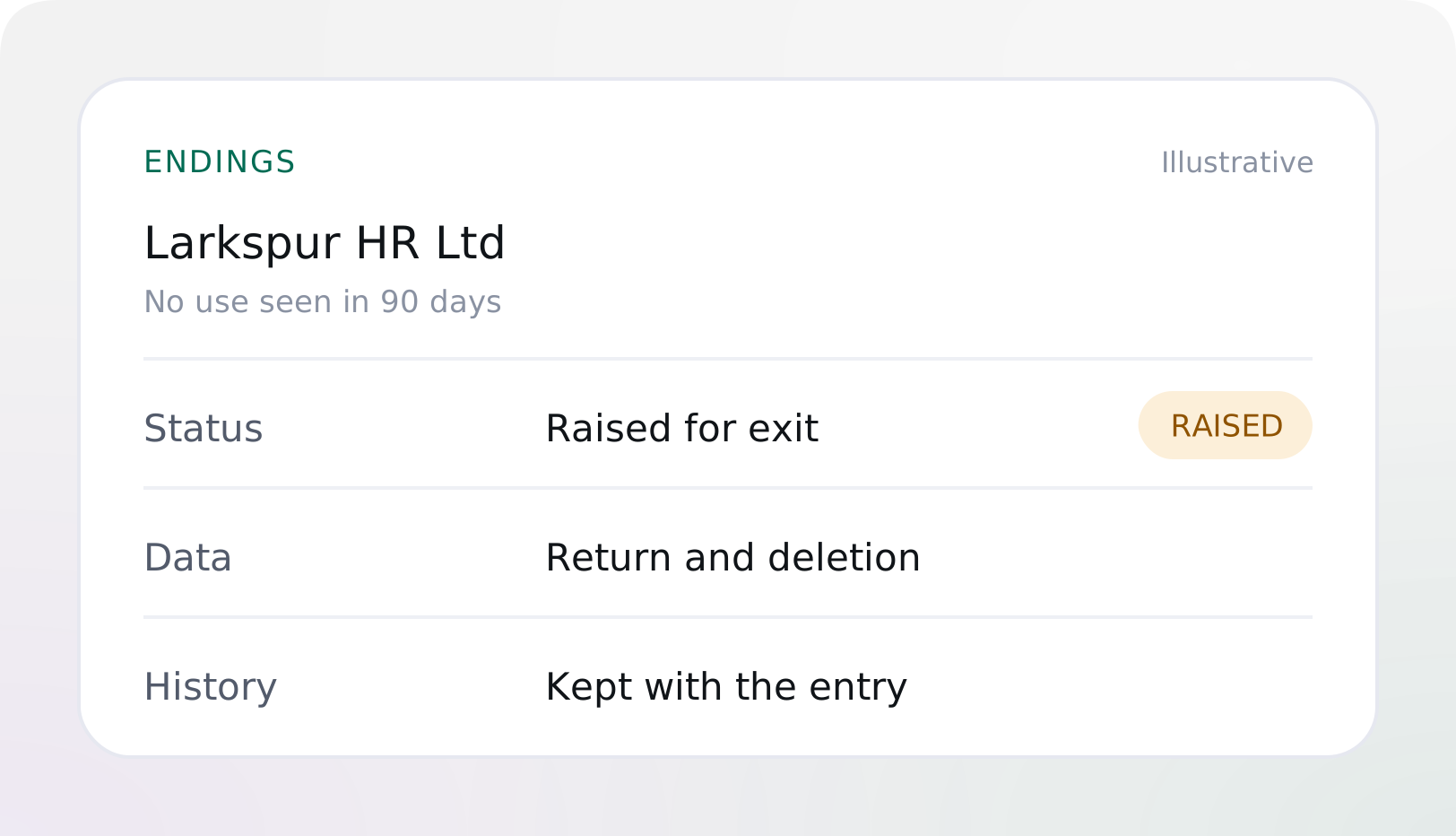
Endings
A supplier no longer in use is raised so the exit can be planned and recorded, with its history kept.
Supply chain
CSF 2.0 moved supply chain risk out of Identify and into the new Govern function, with ten outcomes from setting up a programme to planning what happens after a relationship ends. That makes it a leadership responsibility, shared with procurement, legal and privacy, not only the security team.
Because Govern sits with leadership, Montro gives them a view they can stand behind: which critical suppliers changed, what was decided and who decided it, without reading every entry.
Questions about NIST CSF 2.0, and how Montro supports its supply chain outcomes.
Keep reading
CSF outcomes line up with several European rules and standards. These are the closest.
Third-party records are becoming decision logs. The firms that get this right will be the ones that can show who decided, on what evidence, and when.
A read-only connection, about an hour to set up, and a named person who can say yes to a decision.
Priced to scope — never per seat, never per supplier. Upgrade only when the evidence earns it.