Vendor AI updates, reviewed
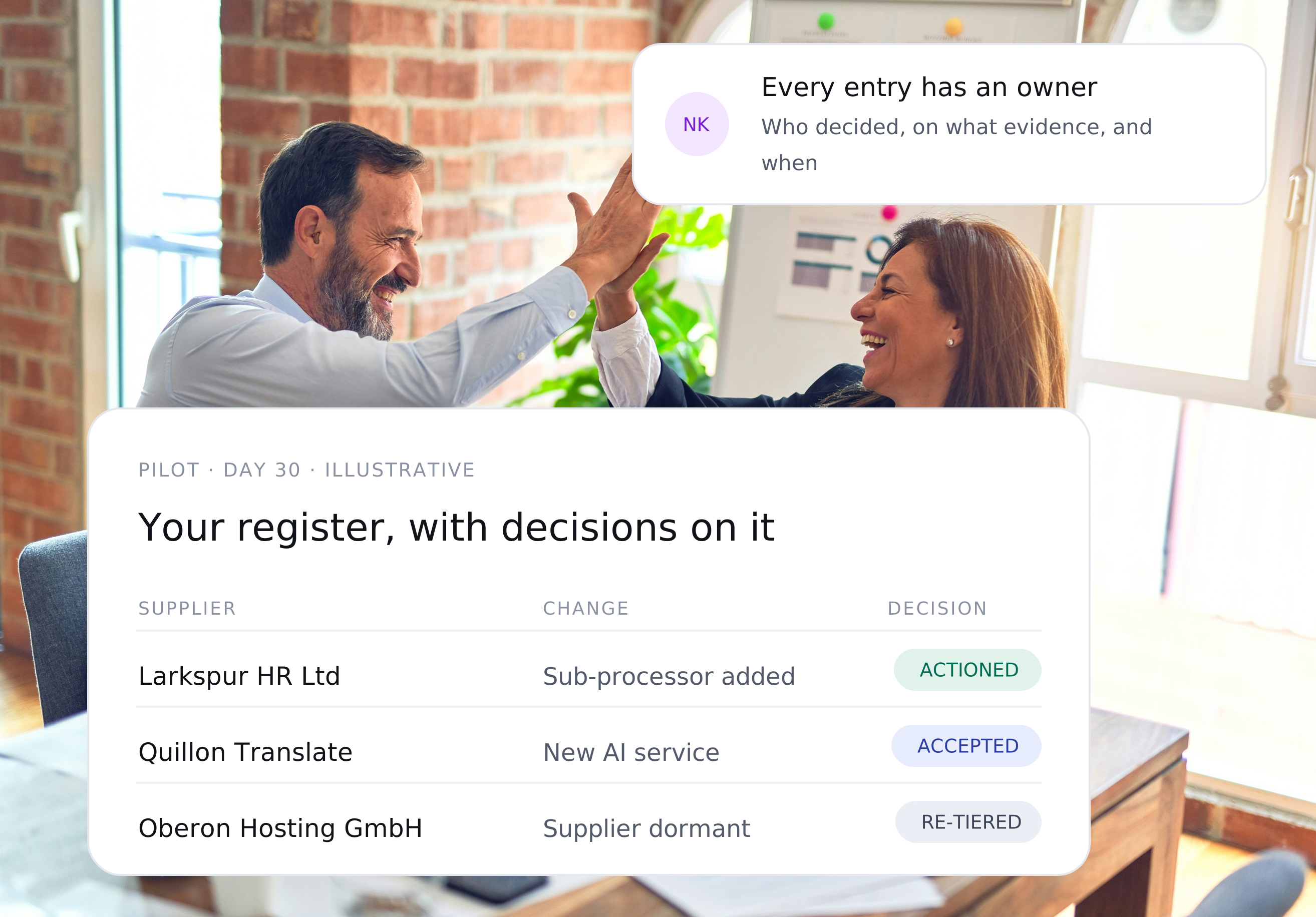
When a vendor adds AI to a product you use, it reaches your team as a change to review, with the vendor’s announcement as its source.
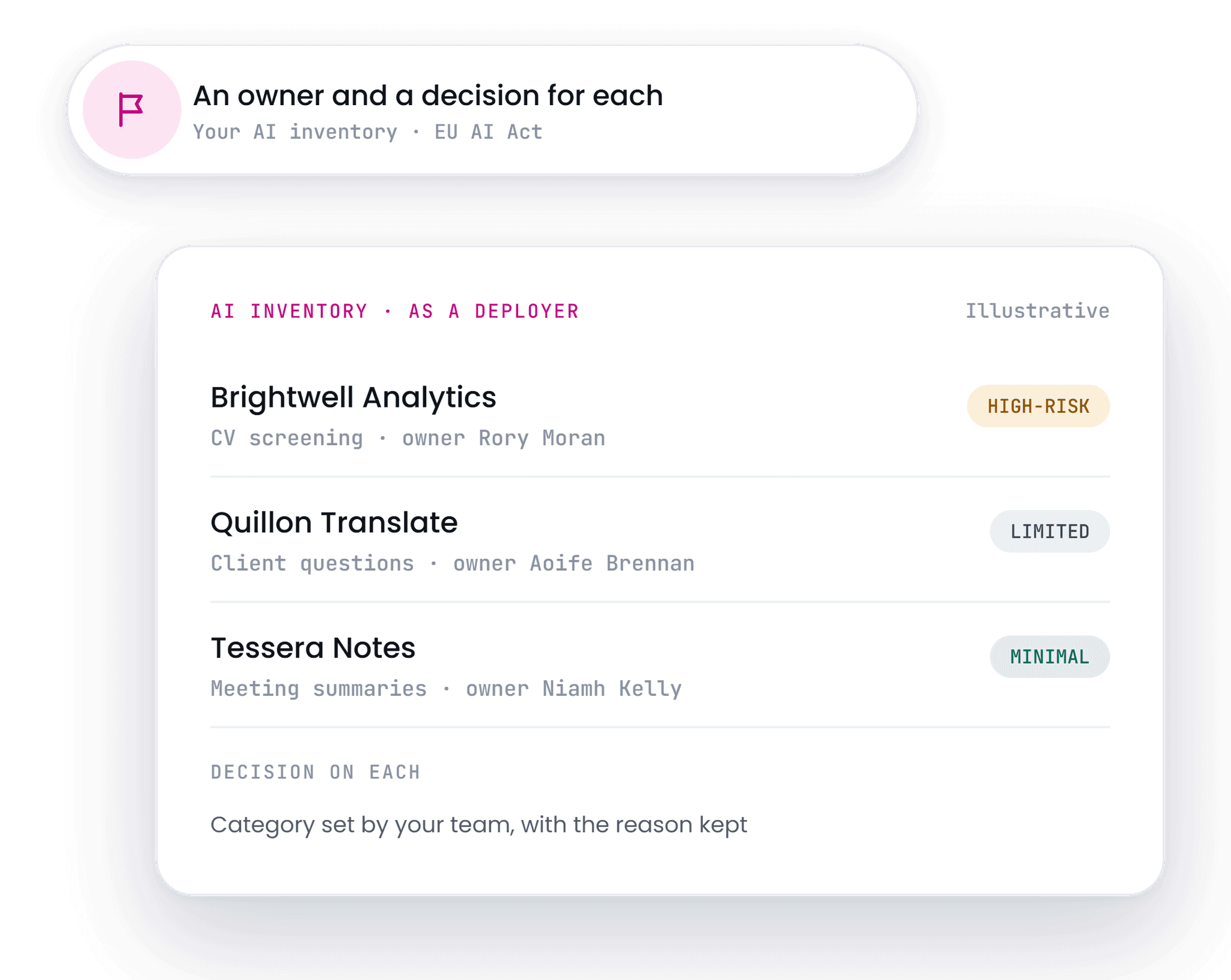
An EU AI Act inventory of the AI tools your teams use, with an owner and a decision for each.

Deployer duties
When a tool is high-risk, deployers must assign human oversight, keep the logs it produces and inform workers it affects. Montro records who is responsible for each duty and keeps the record with the tool’s entry.
Deployer
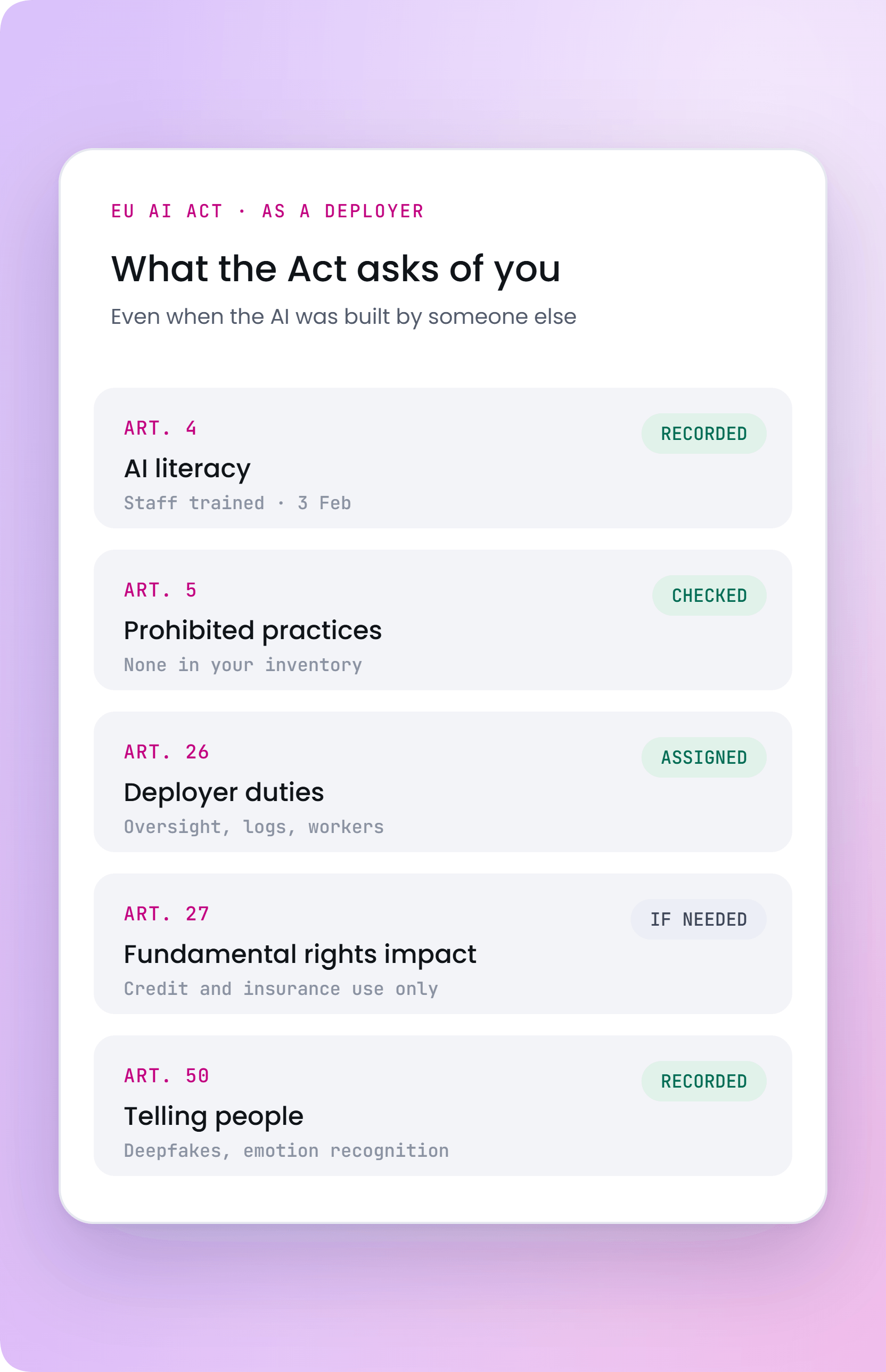
Most of the AI your organisation uses was built by someone else. The Act still gives you duties of your own.
Deployer
Keep staff AI-literate and stay clear of prohibited practices. Public bodies, and firms using AI for credit scoring or insurance pricing, also assess the impact on fundamental rights before first use. Deepfakes and emotion recognition must be disclosed to the people they affect.
Provider
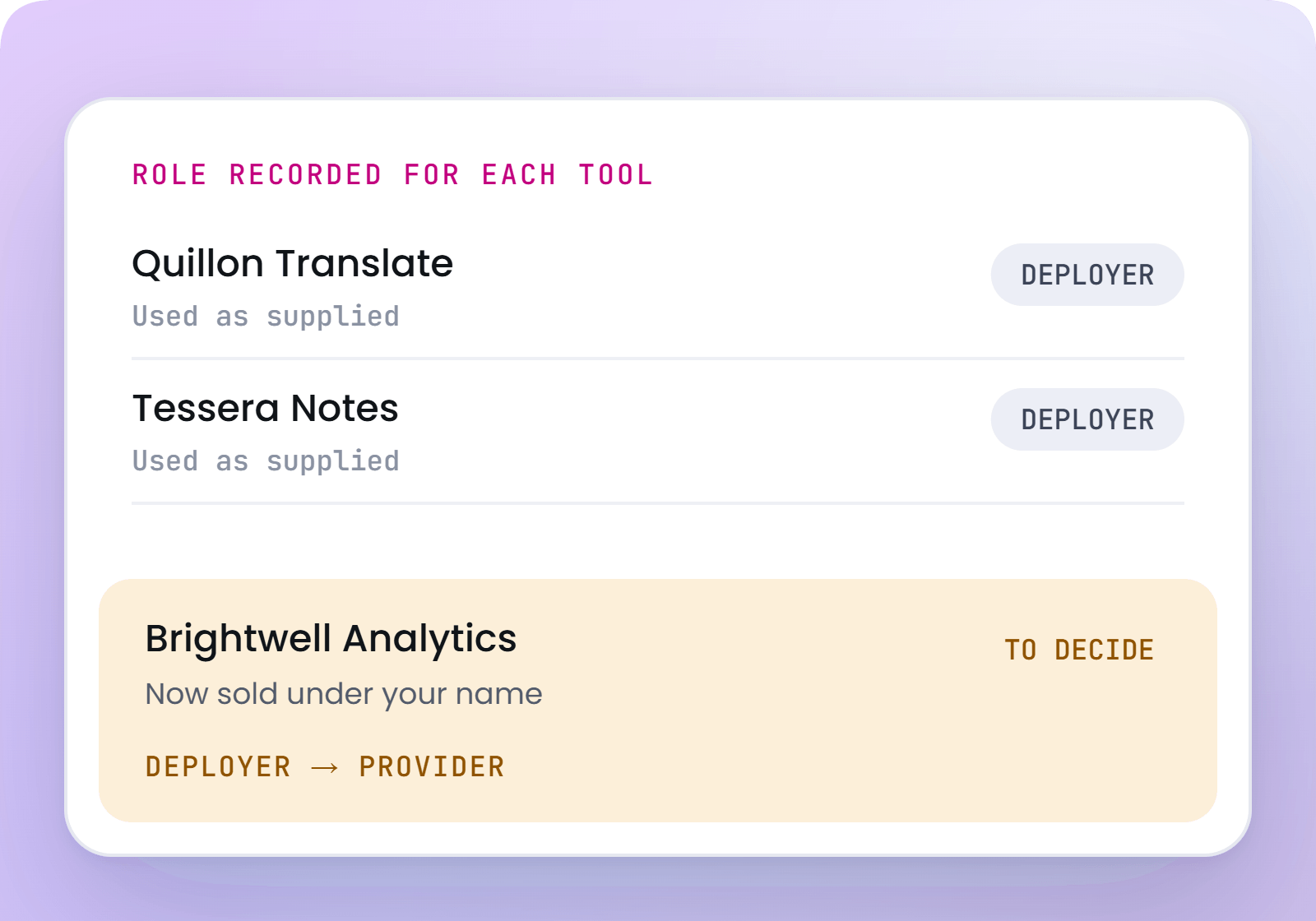
Put your name on a high-risk system, change it substantially, or use a tool for a high-risk purpose it wasn’t built for, and the Act can treat you as its provider. Your team records the role for each tool, so a change in role doesn’t go unnoticed.
What the inventory holds
What sits behind each entry in your AI inventory, and who is responsible for it.
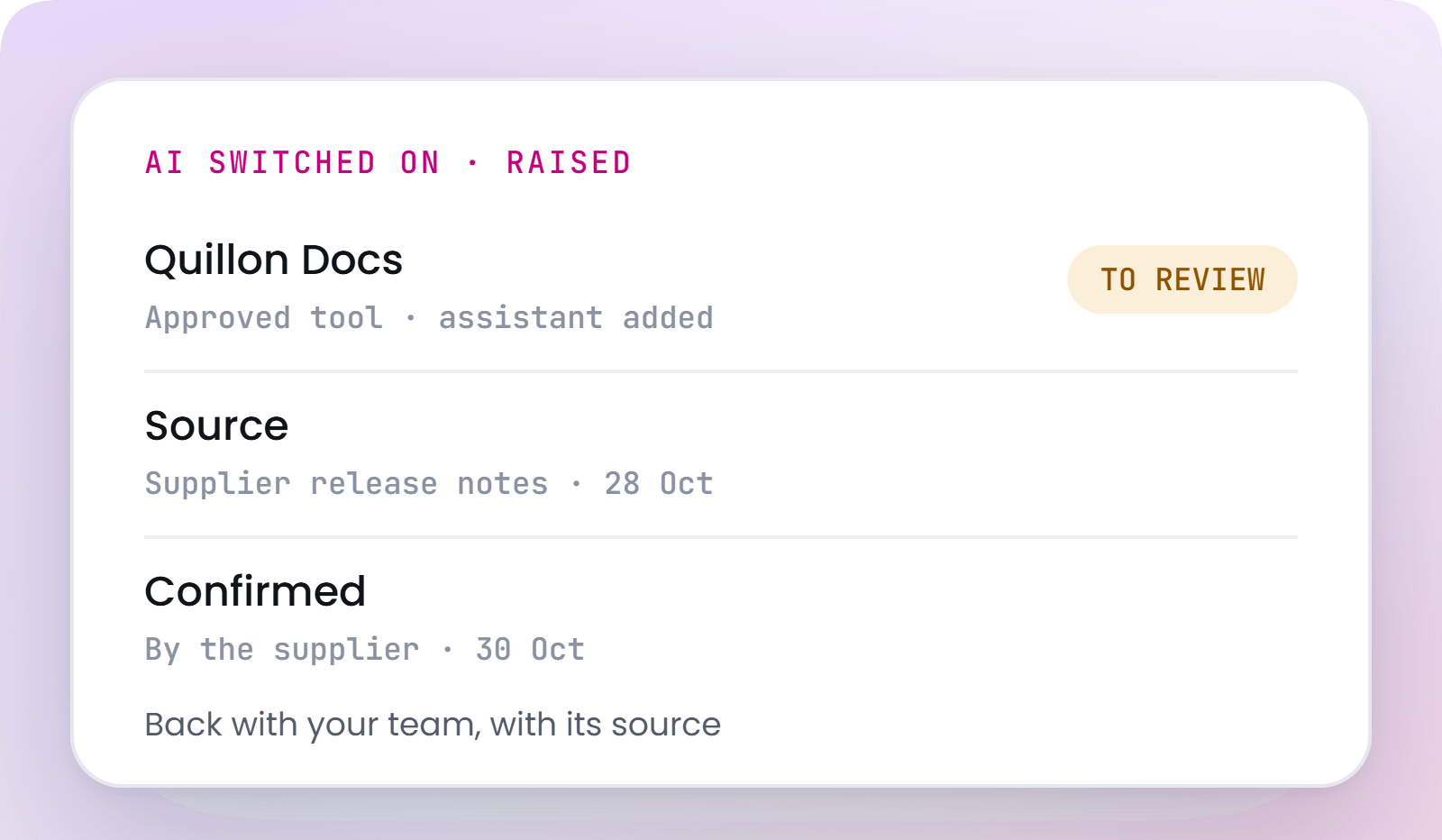
Signals
When a tool you already approved adds an AI feature, it comes back to your team with its source.
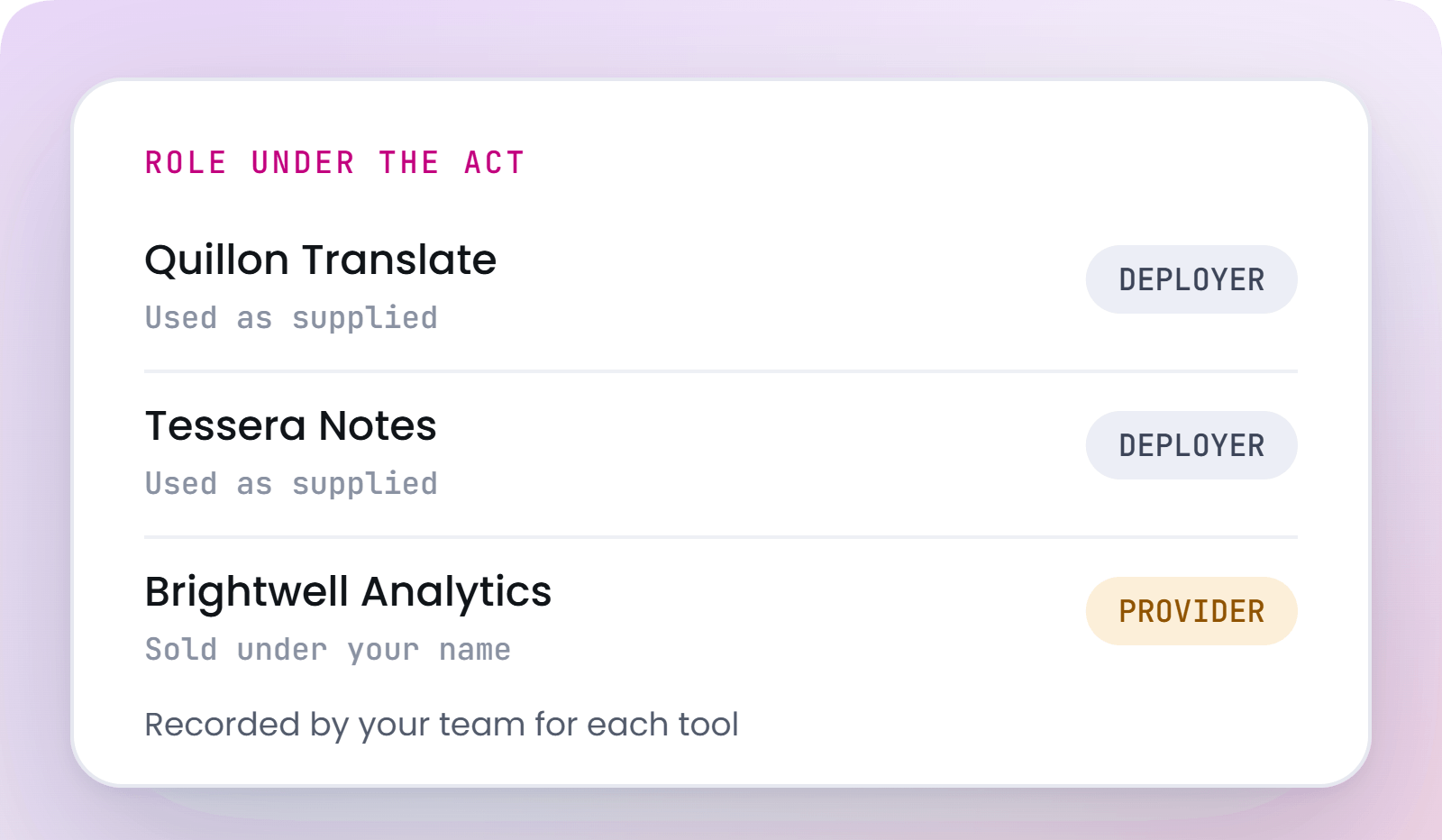
Roles
Your duties under the Act depend on your role. Your team records it for each tool, so the right obligations are followed.
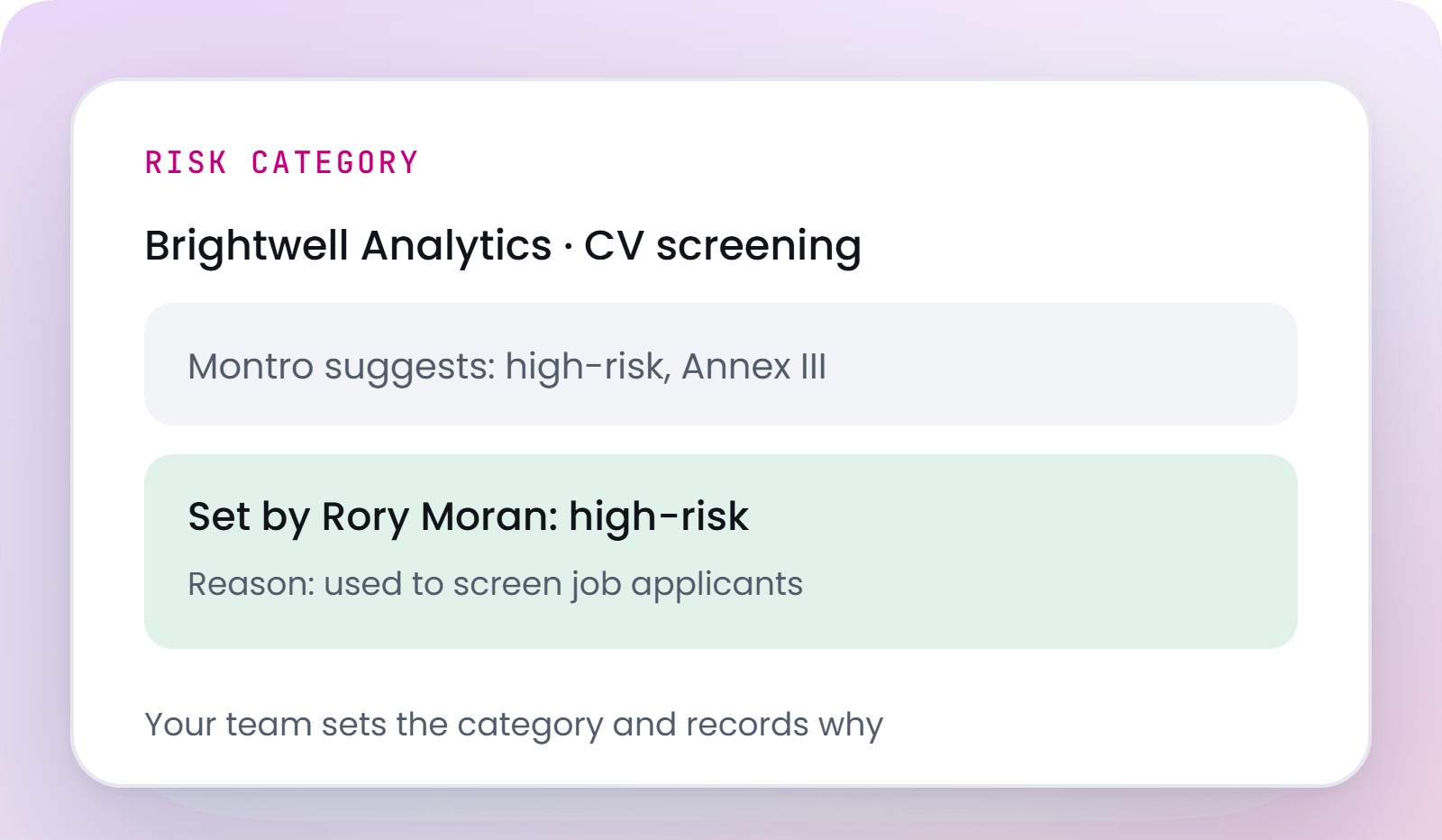
Category
Montro can suggest where a tool may sit under the Act. Your team sets the category and records why.
Benefits
Three moments where it pays off: a vendor ships an AI update, two teams review the same tool, and an AI contract comes up for renewal.
When a vendor adds AI to a product you use, it reaches your team as a change to review, with the vendor’s announcement as its source.

Your DPO and your security team assess the same AI tool from the same record, so a DPIA and a security review don’t start from separate lists.
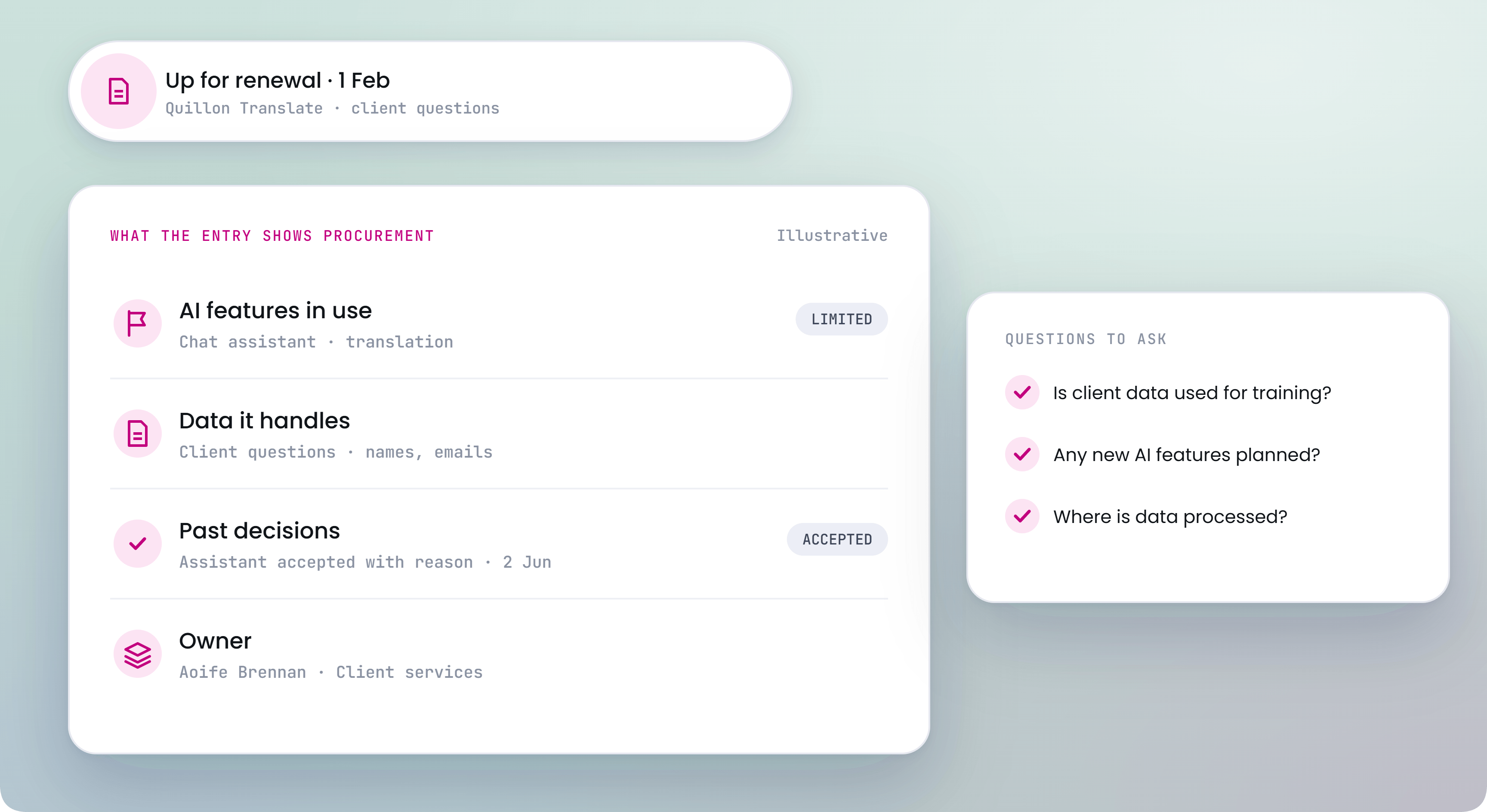
Renewals
When an AI tool comes up for renewal, its entry shows the features in use, the data it handles and past decisions, so procurement asks the right questions.
Keep reading
Each capability works from the same supplier entries. See what else they support.
High-risk uses, general-purpose AI, prohibited practices and who answers for what.
Third-party records are becoming decision logs. The firms that get this right will be the ones that can show who decided, on what evidence, and when.
A read-only connection, about an hour to set up, and a named person who can say yes to a decision.
By booking you agree to our Terms of Service.