Every arrangement
Register of information
Each contractual arrangement with an ICT third-party provider is recorded under Article 28(3) and reported to your competent authority.
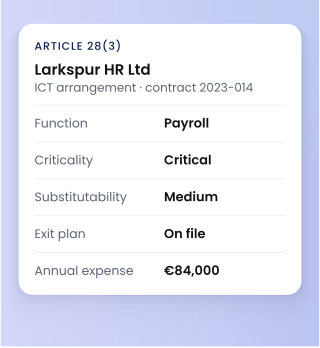
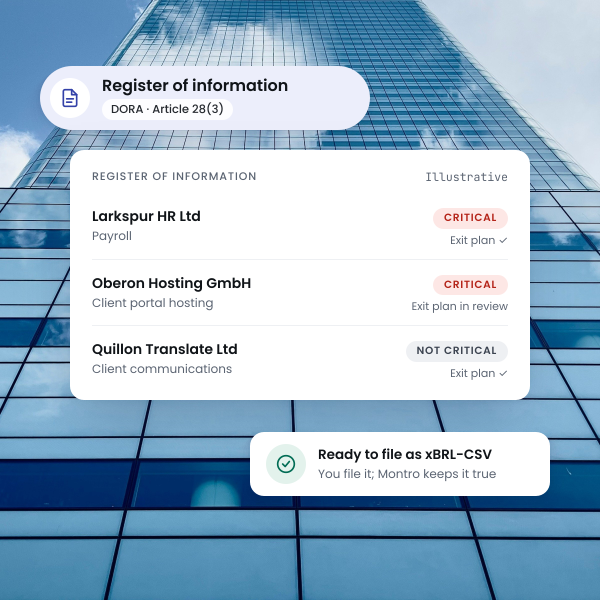
DORA has applied to financial entities since 17 January 2025. Article 28(3) asks each firm to keep a register of information on its contractual arrangements with ICT third-party service providers, and to report it to its competent authority.
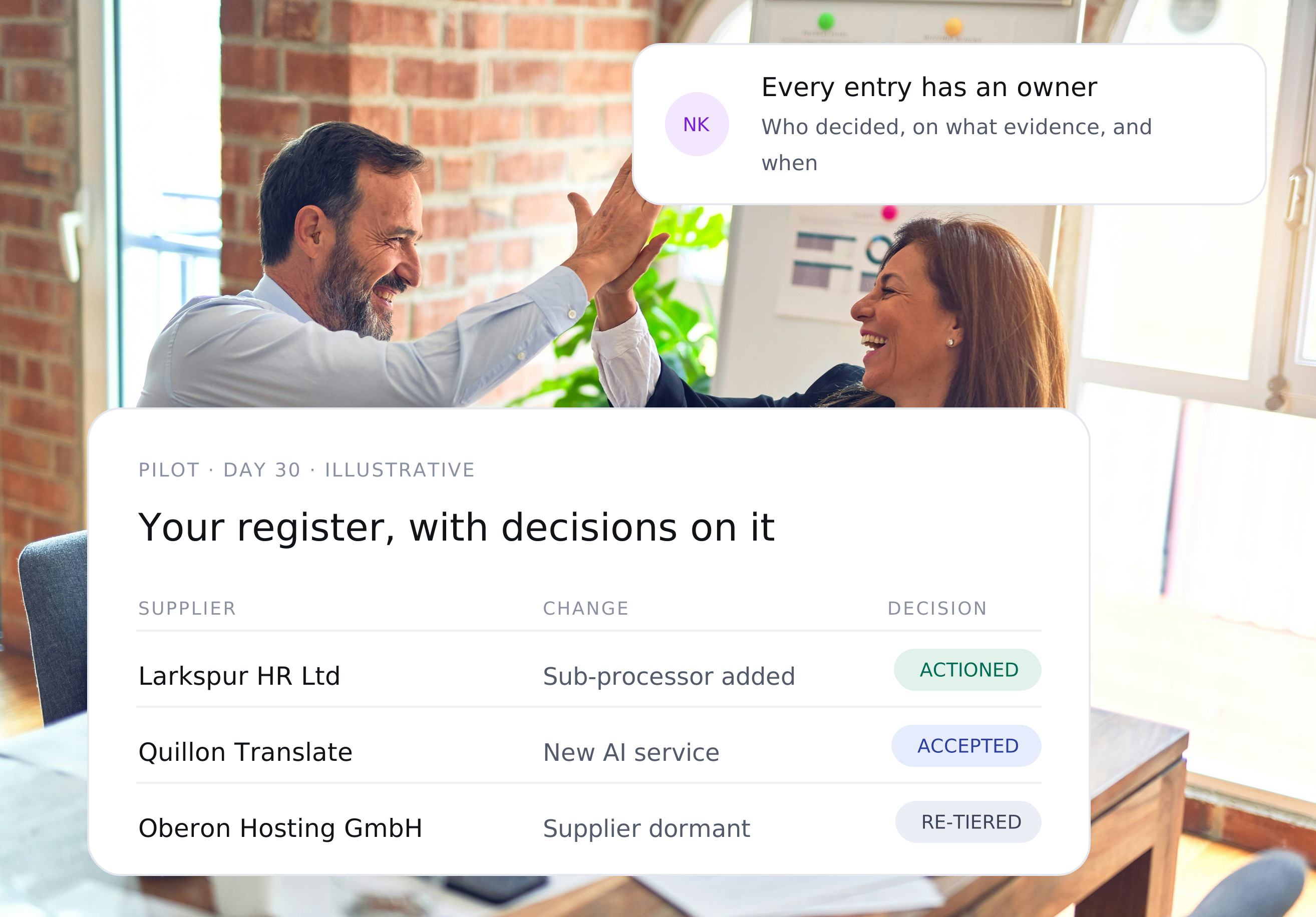
Montro keeps that register current from one read-only intake. Each change to a provider is raised with its source, the provider confirms it, and your team decides, so the register stays ready between submissions.
Framework
DORA requires financial entities to keep a register of information on every contract with an ICT third-party provider, with stricter rules where a provider supports a critical or important function. Third-party risk is where your register of information sits.
Every arrangement
Each contractual arrangement with an ICT third-party provider is recorded under Article 28(3) and reported to your competent authority.
Critical functions
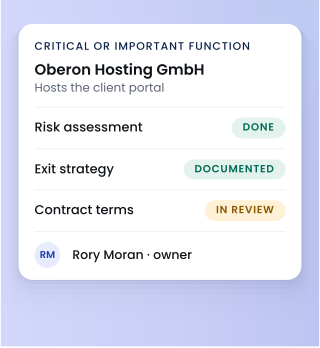
Arrangements that support critical or important functions carry more: a risk assessment, exit strategies and specific contract terms.
Contracts
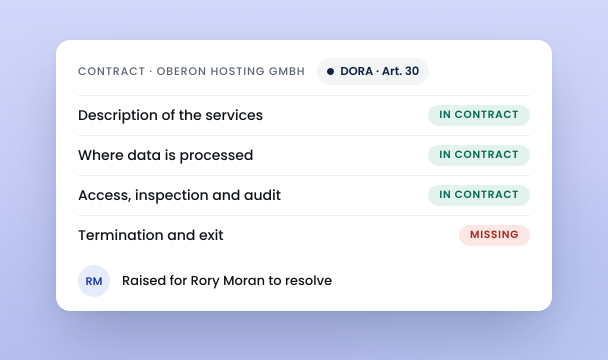
Article 30 sets the key terms every ICT contract must cover, with more for services supporting critical or important functions.
How Montro helps
The register of information lists each ICT contract, the function it supports and the provider behind it, and must be kept current and submitted to your competent authority every year. Your team decides what goes in.

The contract, the function it supports, criticality and materiality, substitutability, exit plan and annual expense, kept for each provider.
When a provider goes quiet, Montro proposes moving it down a tier. It stays on the register while the contract exists, because DORA covers the arrangement, not how much it’s used.
Kept in the xBRL-CSV shape the submission needs, for your team to review and file. You file it; Montro keeps it true.
What you get
Three things that make the register easier to stand behind.
Ownership
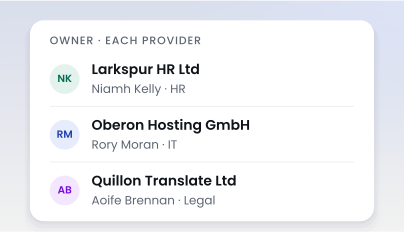
Each provider has someone accountable, so a change never waits for an owner to be found.
UK entities
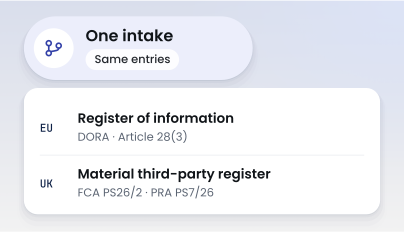
Firms with UK entities also keep the material third-party register under FCA PS26/2 and PRA PS7/26, from the same entries.
Decisions
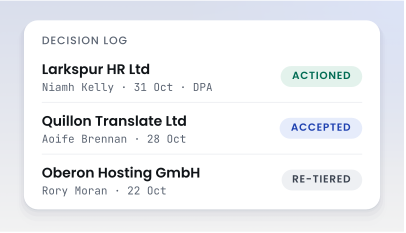
Every change shows who decided, on what evidence, and when, so a question from your competent authority is answered from the record.
DORA in numbers
The European Supervisory Authorities’ own figures put third parties at the centre of DORA.
3,383
major ICT-related incidents reported in 2025
Reported by financial entities under DORA in its first full year of application.
29%
of those incidents started at a third-party provider
Almost a third of major incidents traced back to a failure at an ICT third-party provider.
19
critical ICT providers designated
Named by the ESAs in November 2025 and brought under direct EU oversight.
Questions about DORA, and how Montro keeps your register of information.
Keep reading
An ICT provider rarely sits under one rule. These pages pick up where DORA stops.

If an ICT provider switches on AI in a service you use, the EU AI Act may govern how you deploy it.
Read more
Where a financial entity falls under both, DORA’s ICT rules generally apply in place of NIS2’s.
Read more
ICT providers that process personal data for you also need an entry in your record of processing.
Read moreThird-party records are becoming decision logs. The firms that get this right will be the ones that can show who decided, on what evidence, and when.
A read-only connection, about an hour to set up, and a named person who can say yes to a decision.
Priced to scope — never per seat, never per supplier. Upgrade only when the evidence earns it.