Prohibited
Prohibited practices
Certain uses of AI are banned under Article 5, whoever provides the system.
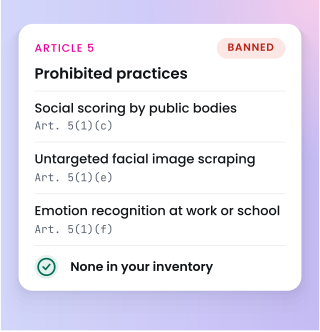
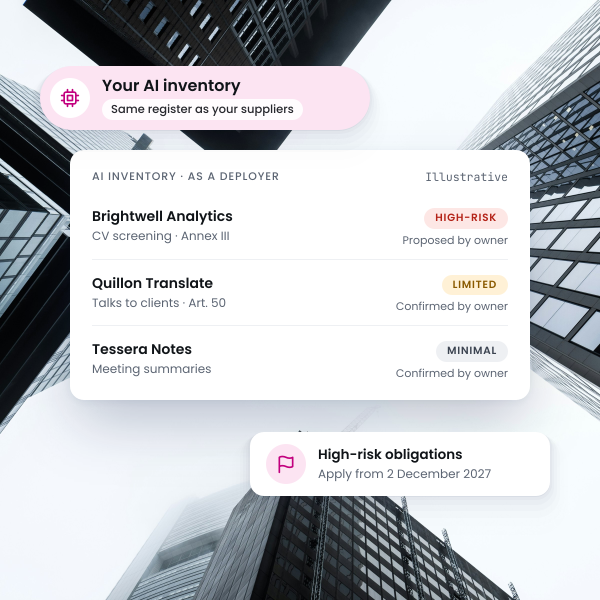
The EU AI Act sets obligations by risk level for organisations that build or use AI. Prohibited practices have been banned since February 2025, and obligations for high-risk systems in Annex III apply from 2 December 2027. As a deployer, you need to know which AI systems you use and where each one sits.
Montro keeps those systems in the same register as your suppliers, including AI switched on inside tools you already approved. Each change arrives with its source, and your team decides.
Framework
The Act sorts AI by risk, and what you owe also depends on whether you build or use it. Some practices are banned, high-risk systems carry the heaviest duties, and AI that interacts with people carries transparency duties. Most everyday AI has none. General-purpose AI models have separate rules.
Prohibited
Certain uses of AI are banned under Article 5, whoever provides the system.
High-risk
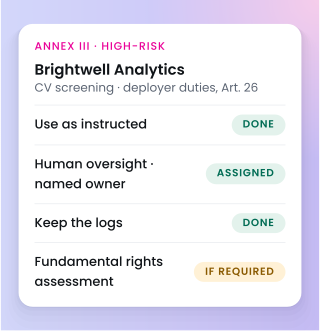
As a deployer, you use them as instructed, assign human oversight, monitor how they operate and keep the logs. Some deployers must also assess the impact on fundamental rights.
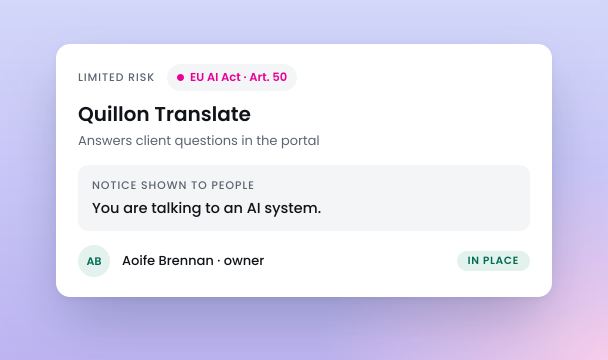
Limited risk
People must be told when they are dealing with an AI system, under Article 50.
How Montro helps
Montro records the AI systems you use as a deployer in the same register as your suppliers. Each one is raised with its source, mapped to the Act, and classified by the person who owns it.

A supplier turns on an AI feature in a product you approved last year. Montro raises it as a change to the contract, not a guess, so the approval can be reviewed.
Each system is matched to a likely category, from prohibited to minimal risk. Your owner confirms it and records why.
An AI service that processes personal data or supports a critical function also appears in your GDPR, DORA or NIS2 records, from the same entry.
What you get
Three things your team can point to when someone asks.
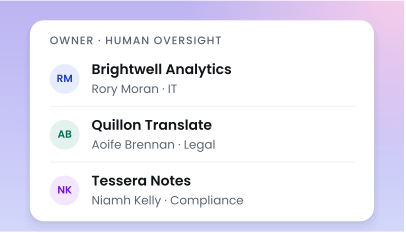
Ownership
The person responsible for human oversight is recorded against each system, so it’s clear who answers for it.
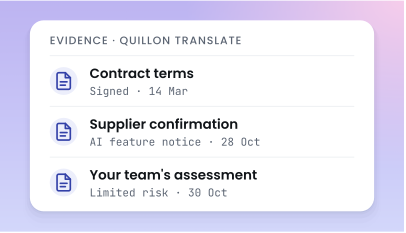
Documentation
Contract terms, supplier confirmations and your team’s assessments sit against the system they relate to.
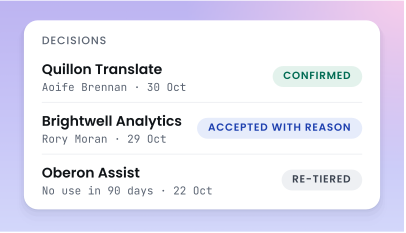
Decisions
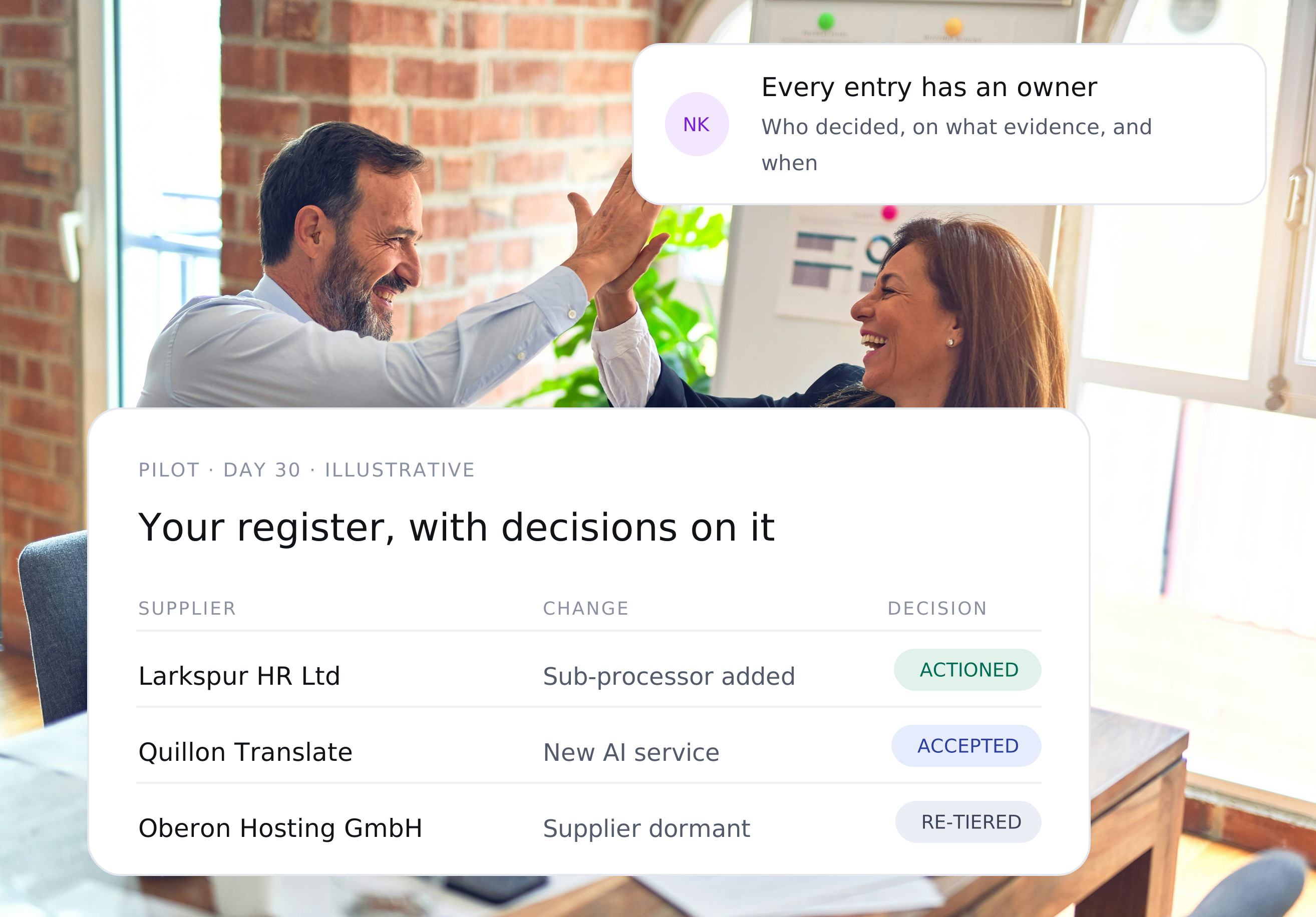
Who decided, on what evidence, and when. AI services nobody uses any more are re-tiered, not removed.
Your role under the Act
Most firms
If you use an AI system under your own authority, the Act treats you as a deployer. The company that built and supplies it is the provider, and carries the heavier duties.
Watch for
Putting your name on a high-risk system, substantially modifying it, or changing its purpose can shift provider duties to you.
The record
Montro records whether you are the deployer or provider for each AI system, and who confirmed it.
Questions about the EU AI Act, and how Montro keeps your AI inventory.
Keep reading
AI tools rarely sit under one rule. These pages pick up where this one stops.

Financial entities must list AI suppliers that provide ICT services in their DORA register of information.
Read more
If you’re in scope of NIS2, AI services in your supply chain fall under its supply-chain security duties.
Read more
AI tools that process personal data need an entry in your record of processing too.
Read moreThird-party records are becoming decision logs. The firms that get this right will be the ones that can show who decided, on what evidence, and when.
A read-only connection, about an hour to set up, and a named person who can say yes to a decision.
Priced to scope — never per seat, never per supplier. Upgrade only when the evidence earns it.